|
Mesopotamia, around 3500 BCE
The oldest wheels we can point to come from Mesopotamia. No name on them, no patent, no founder. Somebody cut a disc, punched a hole through the middle, and the rest of us never stopped using it.
Mesopotamia · c. 3500 BCE
The first human technology.
Someone cut a circle out of stone and put a hole in the middle. Everything humans built after that — pots, carts, roads, trade, cities — rolled on it. Still rolling.

Short version: nobody knows who made the first one, and every single one of us has been using it ever since.
The oldest wheels we can point to come from Mesopotamia. No name on them, no patent, no founder. Somebody cut a disc, punched a hole through the middle, and the rest of us never stopped using it.
The first wheels were not for travel. They spun clay. Potters used them to shape vessels, and those vessels held grain, water and oil — the things a settlement needs to stop moving and start building.
Once the wheel was put on an axle, load stopped being a limit. Sledges became carts. Carts became wagons. One person could move what ten used to drag.
Goods travelled further, cities traded with cities, armies and builders reached places they could not supply before. Every road, mill and machine that came after sits on the same round idea.
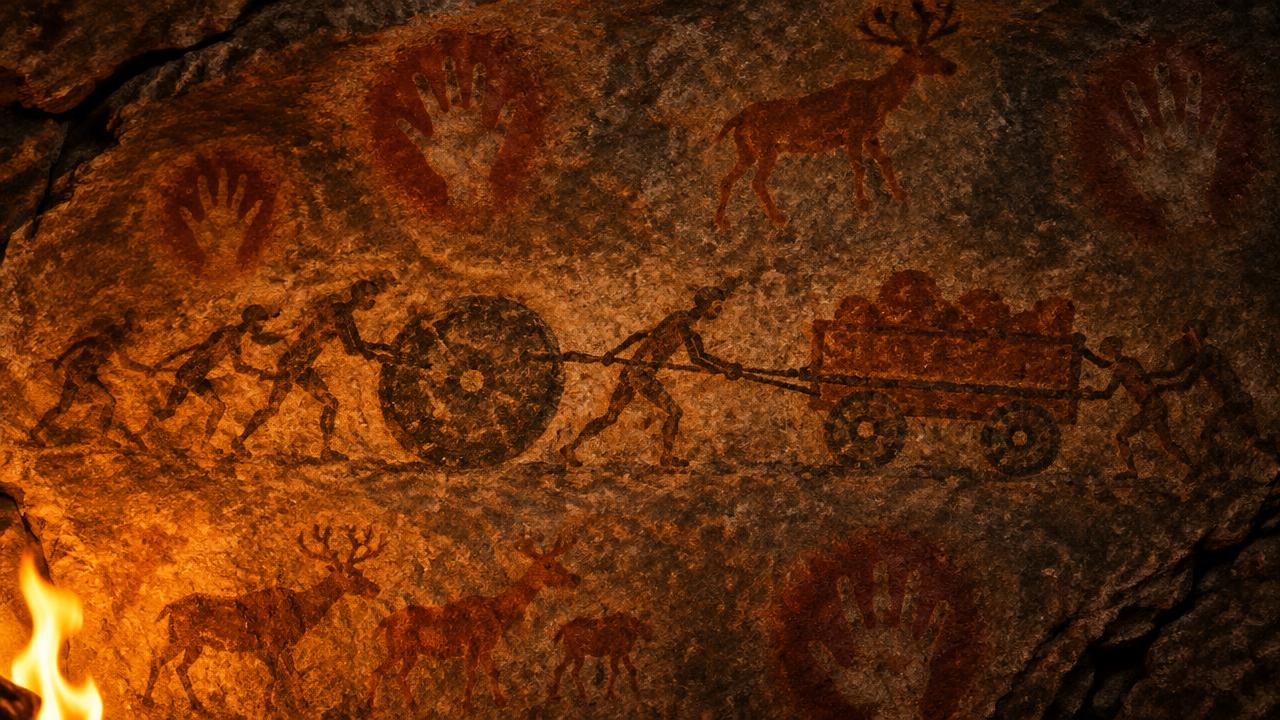
No signature, no founder token, no team allocation. The most useful invention in history was shipped anonymously and fair-launched to the entire species.
Five and a half thousand years of humans finding new things to put wheels on.
next — still the wheel